

A retail refit rarely has unlimited space or an entirely clear site. Stock, display fixtures and contractor materials may need to move several times while parts of the shop remain open. A hired container can support the works by providing an agreed holding area, but its use needs to follow the stages of the refit.
The main risk is losing track of which goods are needed for the next opening area. A well-planned store separates saleable merchandise from dusty construction materials and makes each stage’s fixtures available when installers arrive. More capacity alone will not solve a poorly sequenced move. The Tiger Containers range covers container sales, hire and modifications. The appropriate option depends on the goods, working process and site rather than capacity alone.
Distinguish fixtures from merchandise
Shop fittings can have sharp edges, dirty bases or loose fixings that damage packaged products. Store fixtures and merchandise in separate zones or units where appropriate. Protect finished surfaces and label fittings by their destination bay, including brackets and accessories that would otherwise become anonymous boxes.
Merchandise may have storage requirements that general fixtures do not. Cosmetics, food, electronics and sensitive printed materials should be assessed against their product instructions. Do not assume a weather-resistant container provides temperature-controlled storage. Where conditions cannot be maintained, retain those products in an appropriate existing facility.
Match loading to the opening sequence
Work backwards from each planned reopening date. Items needed first should be accessible without unloading later-stage stock. Agree the sequence with the shopfitter and retail team rather than relying solely on the removal contractor’s loading preferences. A dense load is not necessarily an efficient load when access is required repeatedly.
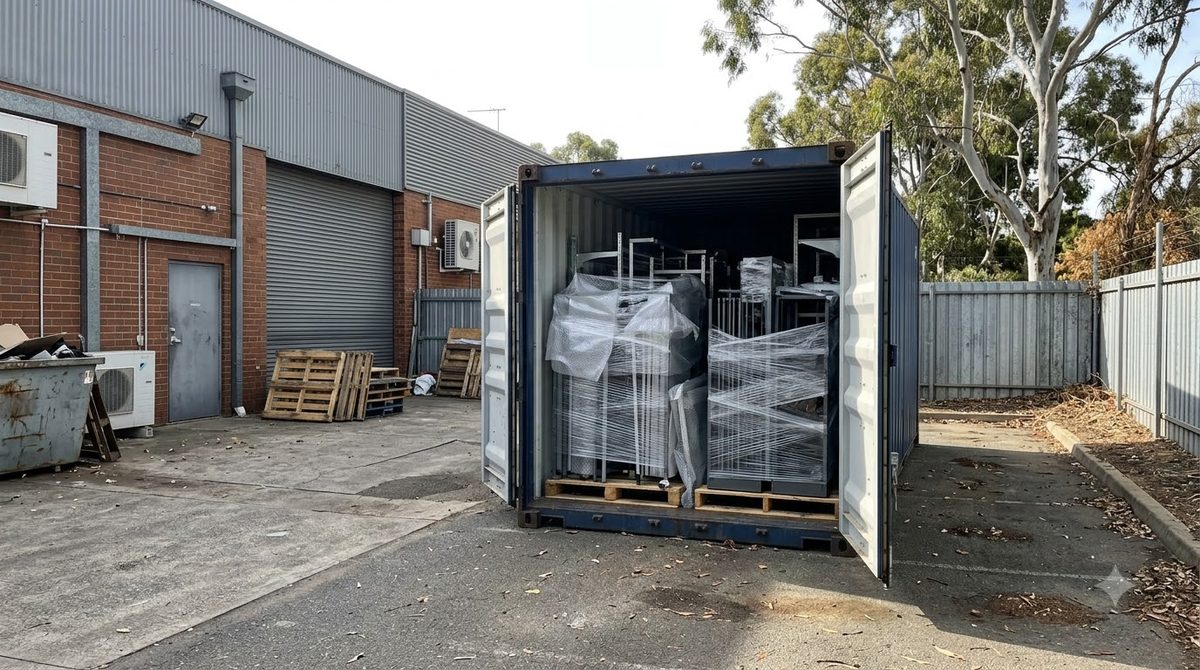
For a store refitting one department at a time, allocate identifiable spaces to each department and keep a current manifest. Photograph the arrangement after loading. If the programme changes, revise the location record and loading plan so that staff are not working from yesterday’s assumptions during a busy trading day.
Protect the boundary between works and customers
Container doors, temporary ramps and loading activity should not spill into customer routes. Consider queues, accessibility, emergency exits and the swept path of delivery vehicles. The refit team should assess the whole working area, including times when adjacent premises receive deliveries or the car park is busiest.
Positioning also affects nuisance. Repeated handling early in the morning, security lighting and contractor traffic can affect neighbouring occupants. Discuss the proposed working arrangement with the property manager and relevant site contacts. Resolve practical constraints before booking delivery, particularly where access is shared or time limited.
Define the handover between stages
Each transfer should record what left the container, its destination and any damage or missing parts. Retain a small area for unresolved items so they do not disappear into a general pile. Check that installers have all components before the next stage begins, allowing replacement parts to be sourced in time.
At the end of the refit, review what remains rather than returning every item to the new store by default. Old promotional materials and redundant fittings can consume valuable space again. Emptying the container should be part of the project close-out, with a clear collection date and confirmation that the access area is ready.
Prepare a simple stage manifest
List the fittings and merchandise allocated to each refit stage, with the expected retrieval date. The manifest should identify quantities and destination areas clearly enough for a removal crew that did not prepare it. Update it when the programme or shop layout changes.
Keep one authoritative version rather than several independent lists held by the retailer, shopfitter and transport team. A shared reference reduces disagreements about what was loaded and what is still needed. Photographs can support the record, but the list should remain understandable without reconstructing the arrangement from images alone.
Manage access when the shop stays open
Decide when stock movements can occur without conflicting with trading or other deliveries. The plan may need different arrangements for large fixture moves and small replenishment tasks. Discuss these with the property manager and site team so that restrictions are reflected in the working schedule.
Give staff a clear route for requesting an item from storage. Unplanned visits can interrupt contractor work and undermine control of the container. A coordinated collection time may be more efficient, provided essential retail needs remain supported. Review the arrangement during the first stage and adjust it if requests show the initial assumptions were unrealistic.
Protect the last days of the programme
Near completion, attention often moves to presentation and reopening while remaining stored goods lose a clear owner. Keep a close-out list for surplus fittings, damaged items and stock awaiting a decision. Assign each item a destination and deadline before the main contractors leave.
Check that final deliveries and container collection do not conflict with the reopening arrangements. Remove temporary protection and waste through the agreed process, and retain condition records where useful. A controlled end to the hire helps the retailer recover normal access and prevents the temporary storage area becoming an unexpected long-term feature of the premises.
A department-by-department retail refit
A retailer updating three departments could allocate container locations to each stage and maintain one manifest shared by the store manager and shopfitter. Fixtures are protected and grouped with their fittings, while suitable merchandise remains in a separate identified area. Sensitive products stay in appropriate existing storage.
The team reviews the next stage before requesting retrieval, confirming that its fixtures and stock are accessible. Changes to the programme trigger a manifest update. At the final stage, surplus promotional material is reviewed rather than automatically returned to the new shop floor. This keeps temporary capacity connected to the refit’s actual sequence and supports a clear transition back to ordinary retail operations.
Specify the hired unit for the actual temporary duty
Use the container hire service to discuss the requirement and confirm the applicable terms. Provide the expected dates, contents and frequency of access. Compare suitable 20ft containers and 40ft containers against the working layout, including the room needed to retrieve goods rather than considering capacity alone.
If a standard arrangement does not suit the task, discuss side-opening container options or the relevant container modifications before booking. Confirm what alterations are permitted on a hired unit and what the return requirements will be. Do not assume the customer’s planned fittings can be installed without supplier agreement.
Include the whole hire cycle in the plan
The booking should sit alongside delivery preparation, routine access, emptying and collection. Give the supplier current site information and a named contact. Ask how the agreement treats notice, return condition and the end of hire, using the actual contract rather than assumptions based on another project or supplier.
Assign responsibility for keeping the container accessible and for reviewing its contents as the temporary requirement changes. Project delays can extend the storage period or alter the goods held. Review those changes before they undermine the original layout or product suitability. A short close-out checklist should identify remaining stock, attachments, cleaning and collection access. This keeps the hire connected to the temporary task from start to finish, with a clear route back to ordinary operations when the extra capacity is no longer required.
Prepare the booking information
Give Tiger the expected start and finish dates, intended contents, access requirements and current site information. Include the planned collection arrangements and any fittings you want to use. Ask for a quotation and the relevant hire terms against that defined scope. Keeping the dates, responsibilities and return requirements visible helps the temporary store support the project without leaving its final emptying and collection to an informal last-minute arrangement.