

Exhibition equipment spends much of its life waiting for its next deployment. Display panels, counters, lighting cases and branded graphics can be bulky, valuable and awkward to replace shortly before an event. A container provides reserve space, but the real benefit comes from returning equipment to a known state after each show.
An effective store supports inspection, repair and repacking rather than simply accepting the previous event’s hurried load-out. The next team should be able to identify a complete display kit and understand what remains to be ordered or repaired without unpacking every case. The Tiger Containers range covers container sales, hire and modifications. The appropriate option depends on the goods, working process and site rather than capacity alone.
Build the inventory around complete display kits
Identify the components required for each stand configuration, including small fittings, cables and assembly instructions. Record which items belong to a particular display and which are shared across several events. Shared components deserve special attention when events overlap, because a physical stock count may conceal a scheduling conflict.
Use durable labels on cases and retain a contents list inside each one. A kit should have a defined status such as complete, awaiting repair or missing components. This prevents equipment being booked for an event merely because its outer case is present in the container.
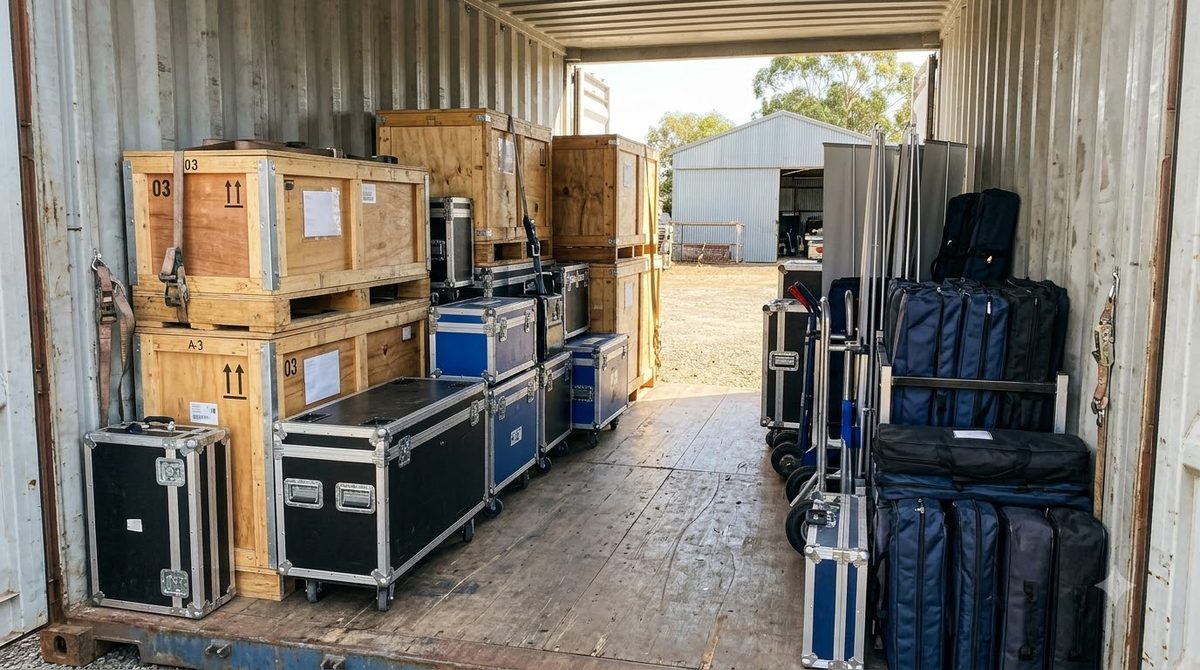
Design storage for fragile and awkward components
Long graphic panels need supported locations that avoid bending. Rolled materials should be stored according to their supplier’s recommendations, and delicate printed surfaces need protection from abrasion. Heavy counters and flight cases should not become improvised supports for fragile displays simply because the shapes happen to fit together.
Keep electronic equipment within its specified storage conditions. Batteries and powered accessories may require separate management, particularly if damaged. A dry container is not automatically a controlled environment or a suitable charging room. Plan preservation and testing around the equipment instructions rather than assuming rugged transport cases solve every storage issue.
Inspect equipment when it returns
The best time to identify missing fixings or damaged graphics is immediately after an event, while the team remembers what happened. Establish a return checklist covering condition, cleanliness, completeness and any consumables used. Record the repair decision and deadline against the next booking.
For example, a supplier attending six trade shows annually could pack a standard core kit after every event and keep optional display extensions in separate locations. That makes a smaller stand quicker to dispatch without dismantling the entire stored arrangement. It also helps distinguish genuine spare capacity from equipment already committed to another event.
Prepare dispatch away from the access bottleneck
Allow a staging space where the next load can be checked without blocking access to everything behind it. The movement route should accommodate the largest case, including any ramp or threshold transition. Confirm handling arrangements for items that cannot be safely lifted by the available team.
Review branding and product information before the next event rather than transporting obsolete graphics. Storage records should connect physical equipment with the current marketing version. The container then becomes a dependable equipment base, helping the business reuse valuable display assets while reducing last-minute replacement purchases and avoidable transport movements.
Build a pre-event readiness check
Set the equipment check far enough ahead of dispatch to allow repairs, replacement graphics and missing fittings to be resolved. The check should confirm the actual stand configuration booked for the next event, including any accessories added after the last show.
Use the kit register to record completion rather than marking the entire container as checked. A stand can be nearly complete while missing the one component that prevents assembly. Confirm power accessories, fixing sets and instructions against the relevant equipment requirements. Where specialist inspection is needed, arrange it through the appropriate competent person rather than treating a visual check as sufficient.
Allocate space for incomplete kits
An incomplete display should have an identifiable location and status. Keep its available components together while recording what is missing and who is responsible for the next action. Scattering the remaining parts among ready kits makes the problem harder to solve and risks creating further incomplete packages.
For a business attending two overlapping events, identify shared items before either load leaves. Decide whether to obtain duplicates, change the stand configuration or move equipment between events through a planned arrangement. The container inventory should support that scheduling decision. It should not promise the same counter, screen mount or lighting kit to two teams merely because each booking was considered separately.
Check the usefulness of what remains
Exhibition collections often retain old graphics, obsolete product panels and damaged cases long after their value has disappeared. Review these items after each event cycle and record a clear reuse, repair or disposal decision. Reserve space for current assets rather than historical clutter.
Keep spare components only when their compatibility is understood. A box of unidentified brackets can consume time without supporting any current display system. Label useful spares against the relevant kit and remove obsolete material through the business’s normal process. This keeps the container focused on equipment that can contribute to the next event.
Preparing one display kit for several events
A business attending a sequence of exhibitions could maintain a core display kit and separately identified optional extensions. After each event, the core kit is checked, cleaned and repacked, while missing or damaged items enter a repair list linked to the next booking. Old graphics are removed from ready stock.
Before dispatch, the team checks the actual configuration required by the venue and confirms any shared accessories are available. It prepares a manifest from the current kit record rather than copying an old loading list. The container then supports repeatable preparation, with incomplete packages visible early enough for action and a clear distinction between equipment stored on site and equipment ready to represent the business.
Choose the enclosure around access and stock conditions
Compare 20ft shipping containers and 40ft shipping containers using the actual inventory and retrieval method. Longer storage space can help with volume, but access frequency, stock shape and handling equipment may control the decision. Check the allocated unit’s clear dimensions and condition before committing the layout, including the effect of packaging and any proposed fittings.
Where stock needs lateral access, discuss side-opening containers. If the operation needs fixed equipment or a tailored interior, the container modification service provides a route to assess the scope. The design should preserve required clearances and inspection access rather than filling every apparent gap.
Match the commitment to the storage period
A temporary peak may justify discussing container hire, while a stable ongoing requirement can be assessed against purchase. Use current quotations and the expected duration, including the relevant delivery, collection and preparation requirements. Avoid assuming that a low periodic rate or a low purchase price represents the complete cost of the arrangement.
Before requesting a quote, prepare an inventory, retrieval schedule and site information. Include sensitive products, unusual loads and any environmental requirements. Agree who manages stock records and condition checks after delivery. The container should support a repeatable working process, with the specification, site and daily routines considered together. Revisit the choice if the stock mix or access pattern changes substantially; a unit selected for reserve storage may not suit a later role involving continuous picking or specialist goods.
Discuss the stock plan with Tiger
Prepare the stock dimensions, approximate quantities, access frequency and proposed storage period before speaking with Tiger. Include photographs and measurements of the site, plus any unusual weights or product requirements. Ask for the container and relevant services to be quoted against that information. A clear enquiry helps the supplier assess the appropriate configuration and gives the business a practical basis for comparing its options before committing to the extra storage.