

Event sites change quickly. An open delivery area can become a pedestrian route, a backstage compound or a fenced hospitality zone within hours. A hired container is useful for equipment and consumables only if its arrival, daily access and collection have been considered against those changing site conditions.
Start with the event production schedule, including the period after the audience leaves. Equipment often returns in a less orderly state than it arrived, while transport windows become tighter and crews become tired. A container plan should make both the opening and closing stages manageable. The Tiger Containers range covers container sales, hire and modifications. The appropriate option depends on the goods, working process and site rather than capacity alone.
Specify the role of each container
Differentiate reserve stock, production equipment, contractor tools and returned goods. Combining unrelated functions can create competing demands on the same doorway. If a container holds equipment that must remain secure throughout the event, it should not also serve as an uncontrolled collection point for numerous suppliers.
Nominate the responsible team and maintain a manifest. Mark items by department or supplier, especially when similar flight cases and cables belong to different organisations. A clear ownership record reduces disputes and prevents important equipment leaving with the wrong vehicle during a hurried load-out.
Reserve access before the site fills
Coordinate the container position with the site plan and vehicle movement plan. Check the arrival route against temporary structures, ground protection and any overhead services. The proposed position must also remain workable after fencing, stages and public facilities have been installed.
Do not assume the delivery method can be repeated at collection. A container placed in an open field may later be surrounded by infrastructure or affected by wet ground. Agree the clearance and ground conditions needed for collection, then protect that area from becoming another team’s convenient storage space.
Make daily access accountable
Establish a workable key or access-control arrangement, including shift changes and emergencies. A single key held by a departing contractor can interrupt the event, while unrestricted access makes losses difficult to investigate. Record issues and returns for valuable equipment and define who may authorise access outside normal operating periods.
Consider an outdoor event storing spare signage and production equipment. Frequently required items can occupy a clearly labelled front zone, while reserve components remain in separate positions. Staff should not need to enter a dark, crowded unit or climb over cases to retrieve a single replacement sign.
Plan a controlled return after the event
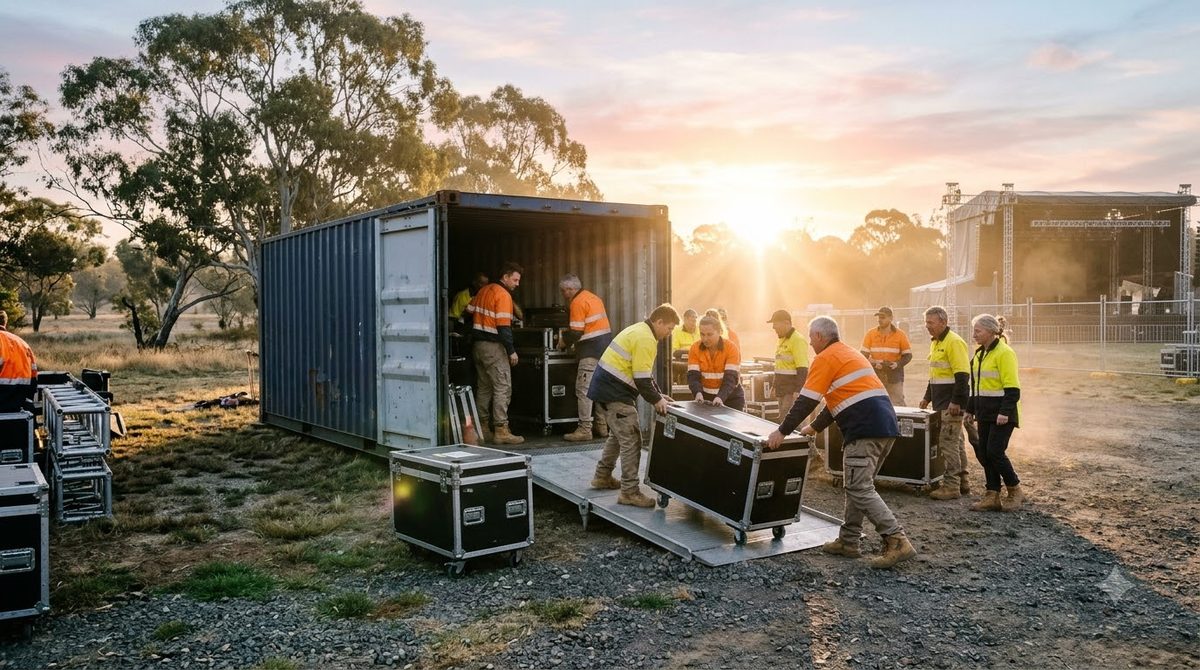
Allow a staging area for returned equipment to be checked before it is loaded. Separate wet, damaged or incomplete items, and record anything requiring repair. Wet cables, fabric and packaging should not simply be sealed away until the next event, because their condition can deteriorate during storage.
Confirm who declares the container empty and ready for collection. Include loose rubbish, temporary shelving and any supplier property in that check. A signed handover with photographs provides a clearer record than an informal message that everything should be finished, particularly where several contractors share responsibility for the site.
Use the event manifest as a handover document
Prepare a list that identifies the equipment, owner and expected destination after the event. Include items that may be consumed or distributed so the return count can be interpreted correctly. A manifest should distinguish a missing asset from stock deliberately used during operations.
Give the relevant production and logistics contacts access to the current record. When equipment transfers between teams, note the movement rather than relying on verbal permission. That becomes particularly useful during overnight shifts, when the people making the original arrangement may be unavailable to explain it.
Keep wet returns from becoming the next problem
Outdoor load-outs often collect rainwater, mud and damp fabric along with the equipment. Establish where those returns will be assessed and dried. Sealing them into the container for transport or storage can affect neighbouring goods and make later cleaning more difficult.
Label items that need attention and keep the status with them through the return journey. If the container is only a short holding point, the receiving depot still needs that information. A brief condition note can prevent a case being placed straight into ready stock when it actually contains wet or damaged equipment requiring further work.
Review the collection window realistically
Bump-out programmes can be optimistic about how quickly infrastructure and equipment will clear. Confirm the dependencies affecting container collection, including fencing removal, ground access and the availability of a competent site contact. Build a clear process for reporting changes to the supplier.
If collection must move, identify the revised access conditions rather than assuming the original plan remains valid. Heavy rain, new stockpiles or vehicles awaiting departure can change the working area. The event team should preserve a usable route until collection is complete, with responsibility assigned even after the main production crew has left.
A controlled equipment base for an outdoor event
An event organiser could allocate one container to production equipment, with a named access coordinator and a manifest identifying supplier ownership. The site plan preserves the doorway working area and the collection route through the event’s final day. Changes to fencing or ground conditions are reported to the logistics contact.
During bump-out, returned goods pass through a check that identifies wet, damaged or incomplete items before loading. The receiving depot gets those status notes with the manifest. A final empty-container check is assigned to a person who remains responsible after the production crews depart. This helps the hire conclude cleanly rather than depending on an assumption that somebody else has cleared the last equipment.
Specify the hired unit for the actual temporary duty
Use the container hire service to discuss the requirement and confirm the applicable terms. Provide the expected dates, contents and frequency of access. Compare suitable 20ft containers and 40ft containers against the working layout, including the room needed to retrieve goods rather than considering capacity alone.
If a standard arrangement does not suit the task, discuss side-opening container options or the relevant container modifications before booking. Confirm what alterations are permitted on a hired unit and what the return requirements will be. Do not assume the customer’s planned fittings can be installed without supplier agreement.
Include the whole hire cycle in the plan
The booking should sit alongside delivery preparation, routine access, emptying and collection. Give the supplier current site information and a named contact. Ask how the agreement treats notice, return condition and the end of hire, using the actual contract rather than assumptions based on another project or supplier.
Assign responsibility for keeping the container accessible and for reviewing its contents as the temporary requirement changes. Project delays can extend the storage period or alter the goods held. Review those changes before they undermine the original layout or product suitability. A short close-out checklist should identify remaining stock, attachments, cleaning and collection access. This keeps the hire connected to the temporary task from start to finish, with a clear route back to ordinary operations when the extra capacity is no longer required.
Prepare the booking information
Give Tiger the expected start and finish dates, intended contents, access requirements and current site information. Include the planned collection arrangements and any fittings you want to use. Ask for a quotation and the relevant hire terms against that defined scope. Keeping the dates, responsibilities and return requirements visible helps the temporary store support the project without leaving its final emptying and collection to an informal last-minute arrangement.