

An office refurbishment often creates a period when furniture must leave the workspace before its replacement layout is ready. Desks, chairs and storage cabinets can occupy far more space than expected, particularly when the team needs access to selected items during the works. A container can support the project if loading follows the refurbishment sequence.
The aim is to preserve the condition of the furniture and make reinstatement predictable. That means deciding what will return, what can be dismantled and what should be disposed of before transport. Storing unwanted furniture for several months simply postpones an existing decision. The Tiger Containers range covers container sales, hire and modifications. The appropriate option depends on the goods, working process and site rather than capacity alone.
Survey the furniture before choosing capacity
Create an inventory with dimensions, quantities and photographs. Identify items that can be dismantled safely and those that must remain assembled. Stacking chairs, loose desk frames and upholstered meeting chairs each require a different packing approach. The total floor area of the old office is not a reliable measure of the storage volume required.
Record fragile finishes and missing hardware before the move. Keep brackets, feet and fixings in labelled bags associated with the correct item. For furniture that requires specialist disassembly or installation, retain the manufacturer’s instructions and use competent personnel rather than forcing components apart to save space.
Load in the order the project needs
Map the refurbishment stages and establish which furniture will be required first. Items for an early reopening area should not sit behind everything belonging to the last stage. If access needs are complicated, separate containers or an alternative configuration may reduce double handling compared with one tightly packed unit.
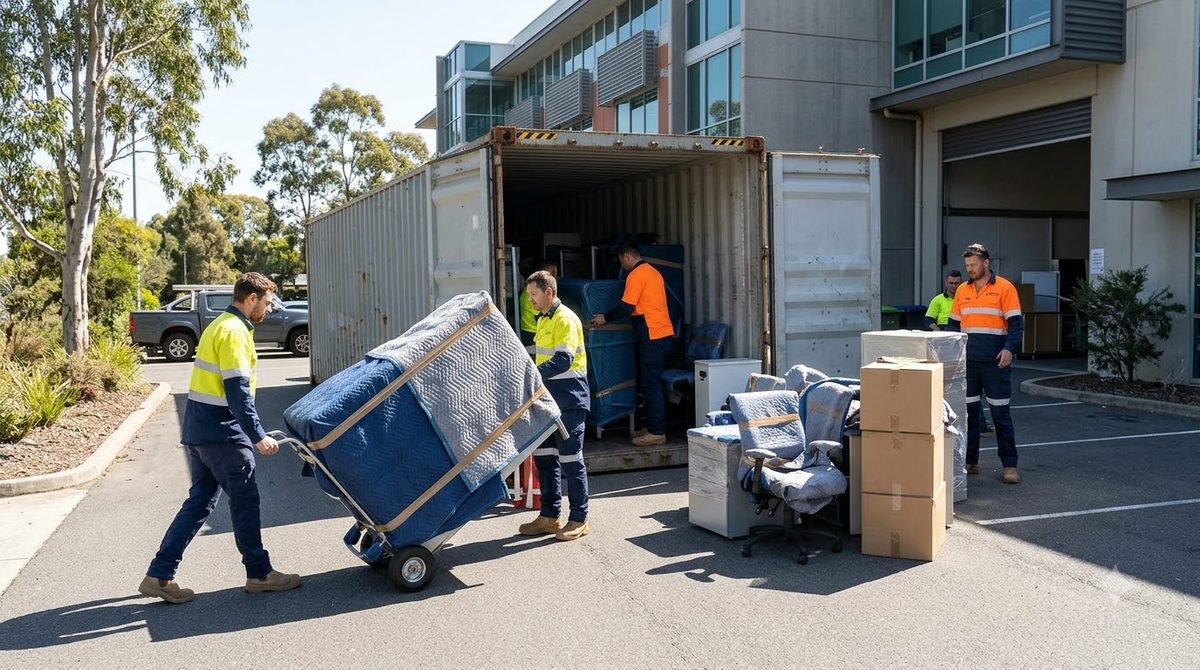
Protect surfaces with materials appropriate to the finish and storage period. Avoid trapping moisture against upholstered items or delicate finishes. Clean and dry furniture before storage, and inspect for damage after dismantling. Goods that enter damp or dirty can create problems for neighbouring items even in an otherwise sound container.
Preserve room and department identities
Furniture often becomes difficult to reinstate because labels identify only the item type. Include the destination room, department or workstation group where that information is known. A simple register linking each item to its future location helps the fit-out team rebuild the workspace without repeatedly unpacking and measuring everything.
Consider an office reopening in two stages. Meeting furniture needed for the first phase can be placed in the accessible zone, with later-stage workstation components behind it. Store each desk’s hardware together and keep a digital copy of the packing register outside the container. This protects the process if labels are damaged or a paper list goes missing.
Plan the move back before the move out
The return route may differ from the original move because partitions, doors or floor finishes have changed. Check access and lifting requirements against the completed design. New flooring also needs protection from trolley wheels and sharp furniture feet during reinstatement.
Allow time for inspection, cleaning and assembly before employees return. The storage period should end with a controlled handover, including checking that the right items have arrived and recording damage promptly. For a hired container, arrange collection only after it is empty and the access route is available, rather than assuming the final removal will fit around other contractors automatically.
Agree responsibility for furniture protection
Clarify who dismantles, wraps, loads and checks each furniture category. A removal contractor may expect the customer to prepare items, while the office team assumes protection is included. Resolve those boundaries before the move so fragile surfaces are not left exposed during a rushed handover.
Photographs should identify the item and any existing damage, not simply show a room full of furniture. Keep them with the inventory and use the same identifiers on the stored pieces. This helps distinguish a new problem from a pre-existing mark and gives the reinstatement team a clear reference when several similar items are involved.
Test the loading plan with an awkward item
Choose one representative bulky item and work through dismantling, movement, protection and placement. Check the route from the old office to the container and from the proposed stored position back to the doorway. This can reveal a component that fits inside but cannot be manoeuvred safely through the available approach.
Use the trial to confirm handling equipment and staffing rather than relying on a vague instruction to take care. If the furniture needs a specialist method, arrange it before the main move. Include the weight and size of protection materials where these affect the handling envelope. A realistic trial is particularly useful when the building remains occupied and the move must fit around other work.
Keep the future layout under review
Refurbishment designs can change while furniture is in storage. When a room layout or workstation count changes, update the inventory’s destination information and decide whether any stored item has become surplus. Otherwise, the team may reinstall furniture according to an outdated plan.
Schedule a review before the return move to confirm dimensions, room readiness and assembly needs. The final move should deliver a functioning workspace rather than a pile of protected furniture awaiting another round of decisions. Connecting storage records with the current fit-out plan reduces double handling and helps the container leave the site promptly.
A phased move for a two-stage office project
An office reopening meeting rooms before its main work area could load the furniture in two identifiable groups. Meeting-room items remain accessible, while later workstation components sit in protected reserve positions. Hardware bags carry the same identifiers as the furniture, and the register records the destination room.
Before the first return move, the team checks that the completed rooms match the latest layout and that the route protects new finishes. It then retrieves only the relevant group and updates the inventory. This avoids unpacking the whole container to recover one early-stage item. The final collection follows a separate check for surplus furniture, loose fittings and packaging, giving the storage period a defined end.
Choose the enclosure around access and stock conditions
Compare 20ft shipping containers and 40ft shipping containers using the actual inventory and retrieval method. Longer storage space can help with volume, but access frequency, stock shape and handling equipment may control the decision. Check the allocated unit’s clear dimensions and condition before committing the layout, including the effect of packaging and any proposed fittings.
Where stock needs lateral access, discuss side-opening containers. If the operation needs fixed equipment or a tailored interior, the container modification service provides a route to assess the scope. The design should preserve required clearances and inspection access rather than filling every apparent gap.
Match the commitment to the storage period
A temporary peak may justify discussing container hire, while a stable ongoing requirement can be assessed against purchase. Use current quotations and the expected duration, including the relevant delivery, collection and preparation requirements. Avoid assuming that a low periodic rate or a low purchase price represents the complete cost of the arrangement.
Before requesting a quote, prepare an inventory, retrieval schedule and site information. Include sensitive products, unusual loads and any environmental requirements. Agree who manages stock records and condition checks after delivery. The container should support a repeatable working process, with the specification, site and daily routines considered together. Revisit the choice if the stock mix or access pattern changes substantially; a unit selected for reserve storage may not suit a later role involving continuous picking or specialist goods.
Discuss the stock plan with Tiger
Prepare the stock dimensions, approximate quantities, access frequency and proposed storage period before speaking with Tiger. Include photographs and measurements of the site, plus any unusual weights or product requirements. Ask for the container and relevant services to be quoted against that information. A clear enquiry helps the supplier assess the appropriate configuration and gives the business a practical basis for comparing its options before committing to the extra storage.