

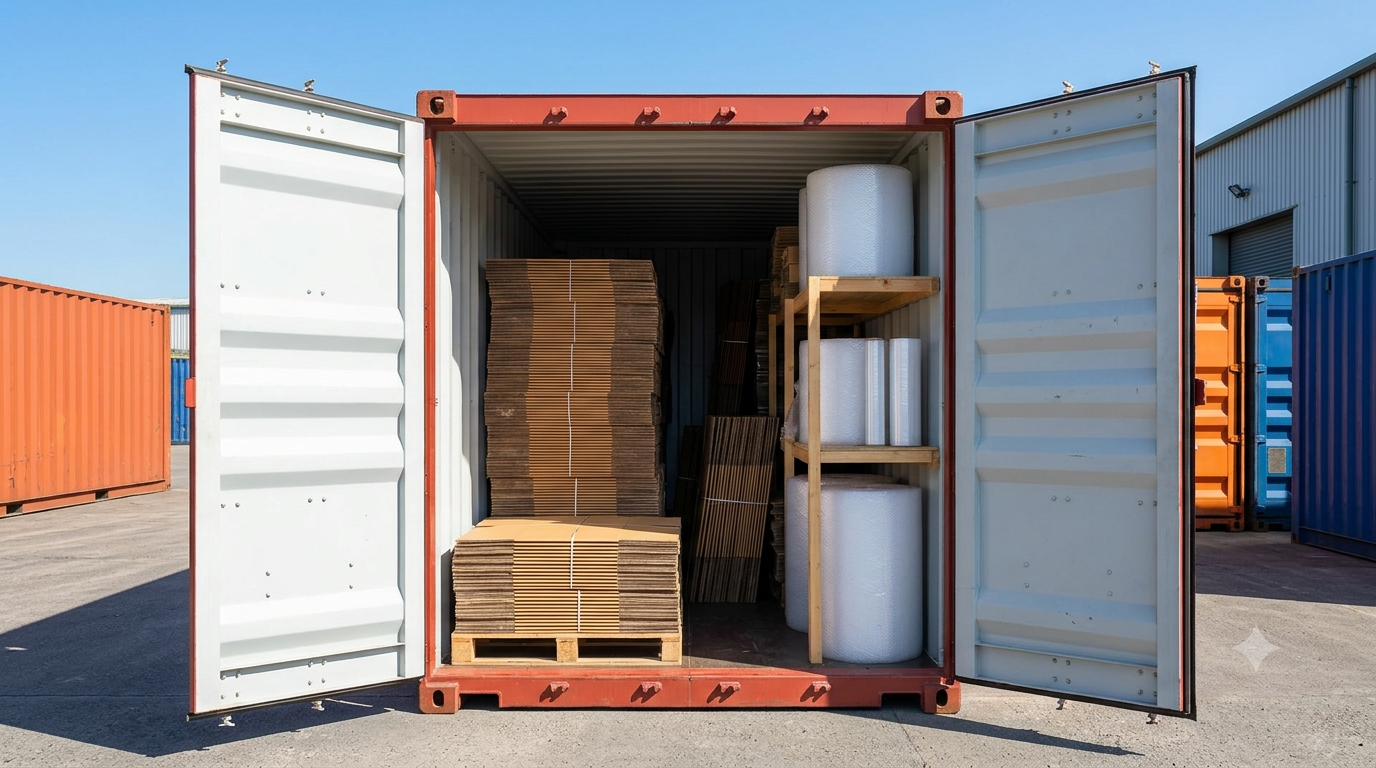
Packaging stock occupies substantial space despite often carrying relatively little weight. Flat cartons, protective inserts and rolls of wrapping material can crowd a warehouse before the products they are intended to protect arrive. A shipping container can provide reserve capacity, but packaging quality depends on the conditions and handling inside it.
The main planning challenge is to keep materials dry, clean and usable while making replenishment straightforward. Damaged cartons create downstream problems with assembly, stacking and customer presentation. A container should therefore be treated as a managed materials store rather than a place to push every spare bundle out of sight. The Tiger Containers range covers container sales, hire and modifications. The appropriate option depends on the goods, working process and site rather than capacity alone.
Group materials by their handling characteristics
Carton bundles, film rolls and rigid protective inserts do not stack in the same way. Identify the largest and least stable packages first, then allocate locations that avoid crushing lighter materials. Retain supplier packaging where it protects the contents, but do not assume a plastic wrap will protect goods indefinitely after it has been torn.
Keep frequently used carton sizes in accessible positions and reserve deeper storage for planned replenishment. Label the outside of each bundle with the size or stock code, including where several similar cartons are used. A misplaced carton size can interrupt packing just as effectively as an actual stock shortage.
Keep paper products away from moisture sources
Cardboard and paper absorb moisture, which can change their stiffness and reduce performance. Do not load wet pallets, damp packaging or recently washed equipment into the same enclosure. Check the container for water ingress and assess internal conditions over the periods when the packaging will be stored, including after humid or cool weather.
Raise stock off the floor using a suitable system and maintain inspection access around vulnerable areas. Avoid pressing bundles directly against steel surfaces where moisture could collect. If a product has specified storage conditions, use those requirements to decide whether a general dry container is suitable or whether additional environmental control is needed.
Plan replenishment in workable quantities
The reserve store should feed the packing area in quantities that employees can handle efficiently. Large deliveries may be economical to purchase, but they can increase carrying effort and damage if individual bundles have to be repeatedly moved. Map the route between the container and the packing benches, including doors, weather exposure and changes in level.
For a small manufacturer, allocating a week of common cartons near the access point can reduce daily handling. Less frequently used promotional packaging can sit further back with its campaign date clearly recorded. The arrangement should change when product ranges or order volumes change rather than remaining fixed through habit.
Check age as well as quantity
Packaging can become obsolete when branding, labelling or product dimensions change. Maintain a stock record that identifies the current version and prevents old artwork from re-entering the packing process. Review slow-moving materials before ordering another bulk quantity simply because the unit price appears attractive.
Inspect rolls, bundles and inserts periodically for deformation, contamination and pest activity. A container can protect stock from external weather when maintained appropriately, but it does not remove the need for housekeeping. Keep waste cartons and food out of the store so that reserve packaging remains separate from materials destined for recycling.
Check handling damage at the replenishment point
Inspect packaging when it moves from reserve storage to the packing area. Crushed edges, distorted folds and damaged protective inserts may be easier to see when a bundle is opened. Record repeated problems against the storage position and handling method so the team can identify a pattern.
If bundles are routinely dragged across the threshold or squeezed between incompatible stacks, review the route and stock arrangement. Packing staff should not need to compensate for poor reserve handling by sorting damaged materials during order fulfilment. Small changes to support, access or replenishment quantities can protect more usable stock than simply increasing the quantity held.
Distinguish purchasing savings from storage costs
A bulk order can reduce unit price while increasing the time and space required to manage the materials. Include the expected rate of use, risk of design changes and handling effort when deciding the order size. Packaging ordered for a short campaign may have little value after the promotion ends.
Work through a realistic example using the nursery, manufacturer or retailer’s actual consumption. If a delivery contains many months of one carton size, ask whether the container will remain available for that period and whether the product range is stable. A lower purchase price does not automatically justify holding excess quantities. The most useful reserve stock supports expected demand without making the store difficult to inspect or access.
Keep the specification attached to the material
Packaging materials can differ in dimensions, strength, surface treatment and intended use even when they look similar. Retain the relevant supplier specification with the stock code, and prevent substitutions being made solely because another carton appears close enough in size.
If the business changes a packaging specification, identify the remaining old stock and decide its destination. Do not leave mixed versions in the same location with one generic label. Clear version control helps protect product presentation and avoids failures that only become visible after an order has left the business.
A reserve arrangement for a packaging-intensive business
A manufacturer using several carton sizes could store reserve bundles by production family, with the next replenishment quantities near the access point. Each location identifies the specification and artwork version. The packing team requests a planned quantity rather than searching through several months of stock whenever a bench runs low.
On receipt, staff check packaging condition and keep damp pallets out of the dry reserve area. They review slow-moving branded materials before the next purchase order. This arrangement makes the container part of the production supply process, preserving usable packaging and providing a clearer view of what is available. It also exposes obsolete stock before another large order consumes the remaining capacity.
Choose the enclosure around access and stock conditions
Compare 20ft shipping containers and 40ft shipping containers using the actual inventory and retrieval method. Longer storage space can help with volume, but access frequency, stock shape and handling equipment may control the decision. Check the allocated unit’s clear dimensions and condition before committing the layout, including the effect of packaging and any proposed fittings.
Where stock needs lateral access, discuss side-opening containers. If the operation needs fixed equipment or a tailored interior, the container modification service provides a route to assess the scope. The design should preserve required clearances and inspection access rather than filling every apparent gap.
Match the commitment to the storage period
A temporary peak may justify discussing container hire, while a stable ongoing requirement can be assessed against purchase. Use current quotations and the expected duration, including the relevant delivery, collection and preparation requirements. Avoid assuming that a low periodic rate or a low purchase price represents the complete cost of the arrangement.
Before requesting a quote, prepare an inventory, retrieval schedule and site information. Include sensitive products, unusual loads and any environmental requirements. Agree who manages stock records and condition checks after delivery. The container should support a repeatable working process, with the specification, site and daily routines considered together. Revisit the choice if the stock mix or access pattern changes substantially; a unit selected for reserve storage may not suit a later role involving continuous picking or specialist goods.
Discuss the stock plan with Tiger
Prepare the stock dimensions, approximate quantities, access frequency and proposed storage period before speaking with Tiger. Include photographs and measurements of the site, plus any unusual weights or product requirements. Ask for the container and relevant services to be quoted against that information. A clear enquiry helps the supplier assess the appropriate configuration and gives the business a practical basis for comparing its options before committing to the extra storage.