

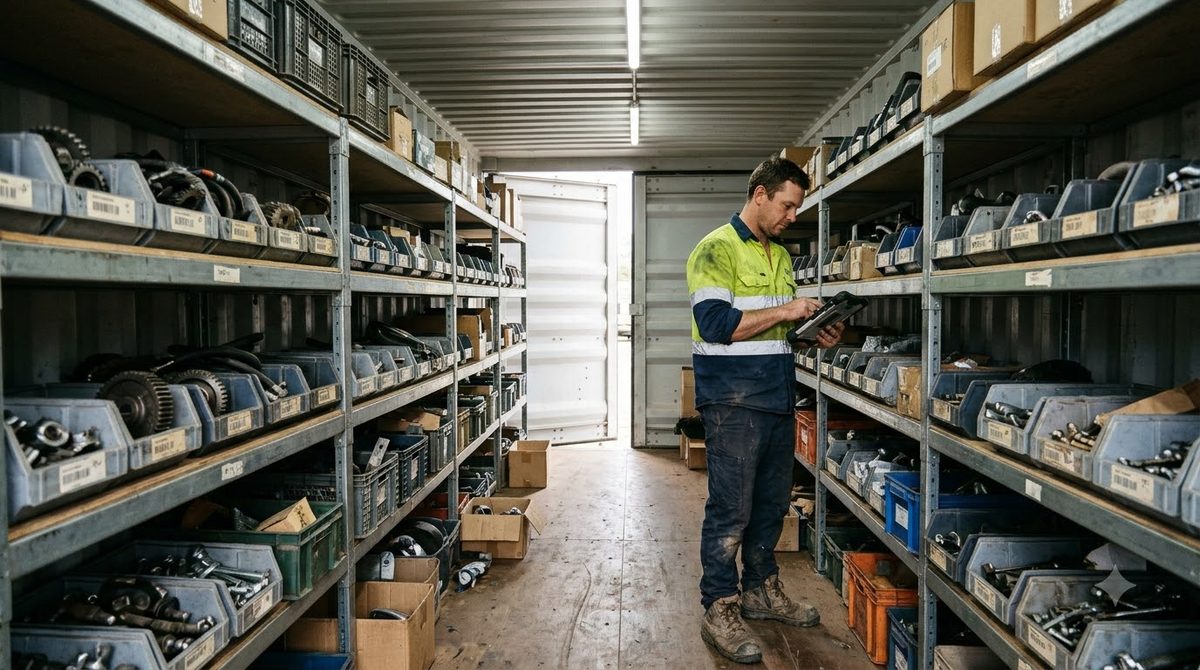
Spare parts storage succeeds when the right component can be found before equipment downtime becomes expensive. A container full of unidentified boxes may contain considerable value yet provide little operational benefit. The layout needs to reflect how maintenance staff search for parts, how often items are used and what happens when an essential component is missing.
A well-organised container can separate reserve parts from a busy workshop and provide a dedicated inventory space. The design should combine suitable storage conditions with an accurate location system, rather than relying on the memory of a single experienced technician. The Tiger Containers range covers container sales, hire and modifications. The appropriate option depends on the goods, working process and site rather than capacity alone.
Classify parts by operational importance
Begin with criticality rather than size or purchase price. A low-cost seal may stop production just as completely as an expensive motor. Identify parts with long replenishment lead times, those shared across several machines and those whose absence would prevent a safe restart. These categories help determine minimum holdings and review priorities.
Next distinguish regular consumables from insurance spares that may remain untouched for years. Consumables need efficient replenishment access, while long-held components require preservation and periodic inspection. Keeping both under one undifferentiated stock policy can produce excess holdings of common items and shortages of essential ones.
Match storage to the component
Bearings, electronic controls, rubber seals and fabricated steel components have different environmental sensitivities. Retain appropriate protective packaging and follow the component manufacturer’s storage instructions. Some items require humidity control, temperature limits or periodic preservation measures that an unconditioned dry container cannot provide by itself.
Keep heavy parts low and avoid placing concentrated loads on unsuitable shelving. Long shafts and awkward assemblies need supported locations that prevent rolling or bending. Separate oily used components from clean new stock so that contamination does not undermine a repair. Record whether an item is new, serviceable, awaiting testing or suitable only for scrap.
Make identification possible without opening boxes
Use a consistent parts code, description and location reference on the outside of the packaging. Include equipment compatibility where similar components can be confused. Photographs and dimensions can help distinguish visually similar parts, but the manufacturer’s part number remains important when substitutions would affect fit or performance.
A maintenance team could assign each shelving bay a letter and each shelf a number, then link those locations to the inventory system. The process only works if withdrawals and returns are recorded immediately. A component removed during a night shift should not remain available on the system until somebody discovers the empty box a week later.
Treat repaired parts as a separate stock stream
Repaired motors, refurbished tools and tested assemblies need a documented release back into service. Include the repair date, test status and any limitations with the item. Keeping them beside new stock without identification encourages assumptions that may be costly during an urgent breakdown.
Conduct regular spot checks of critical holdings and investigate differences rather than simply correcting the quantities. Repeated discrepancies can indicate unclear issue procedures, duplicate stock codes or parts being kept elsewhere. A container should make the stock system more dependable, with enough visibility to find causes rather than merely providing more room for uncertainty.
Link the stock policy to maintenance planning
The parts register and maintenance schedule should inform one another. Planned service tasks reveal predictable demand, while breakdown records show which items repeatedly cause urgent shortages. Review those sources together rather than ordering only in response to the last fault.
Include the complete repair requirement. A replacement assembly may still need gaskets, fasteners or connectors that are not supplied with it. Record those dependencies so the store can support a complete job. Where equipment models have changed, verify the part numbers before increasing stock. An obsolete component does not become useful merely because it occupies a neatly labelled shelf.
Preserve evidence for warranty and failure investigation
Removed components may need to be retained for a supplier claim or technical investigation. Give them a separate identity and record the equipment they came from, the removal date and the reported failure. Preserve relevant labels and avoid dismantling or cleaning them in a way that would compromise an agreed investigation.
Set a review date for those holdings. Once the claim or investigation is complete, decide whether the component is repairable, serviceable or ready for disposal. Without a close-out step, the container can gradually fill with failed parts that nobody is authorised to remove. Keeping this stream separate also reduces the chance of a defective component being mistaken for a ready spare during an urgent repair.
Audit a few critical items thoroughly
A focused check of selected critical spares can reveal weaknesses that a quick whole-store count misses. Confirm the part number, quantity, condition, preservation requirements and actual retrieval route. Check whether the supporting instructions and installation accessories are also available.
Use discrepancies to improve the process rather than only correcting the record. If several parts have moved without an issue transaction, review how emergency withdrawals are handled. If labels are unreadable, change the labelling material or position. The purpose is a dependable maintenance response, with the container supporting accurate decisions under pressure.
A practical store for a small maintenance department
A maintenance team supporting several similar machines could group standard service items separately from equipment-specific critical spares. The inventory connects each component with its part number, compatible assets and shelf position. Repaired assemblies remain in a clearly identified status until the relevant release checks are complete.
During a breakdown, the technician can verify the component and collect the associated fittings without dismantling unrelated stock. After the repair, the issue record triggers replenishment and any failed part enters the investigation stream. The container supports the complete maintenance cycle, giving the business dependable access to suitable components rather than merely providing a place to accumulate everything removed from a machine.
Choose the enclosure around access and stock conditions
Compare 20ft shipping containers and 40ft shipping containers using the actual inventory and retrieval method. Longer storage space can help with volume, but access frequency, stock shape and handling equipment may control the decision. Check the allocated unit’s clear dimensions and condition before committing the layout, including the effect of packaging and any proposed fittings.
Where stock needs lateral access, discuss side-opening containers. If the operation needs fixed equipment or a tailored interior, the container modification service provides a route to assess the scope. The design should preserve required clearances and inspection access rather than filling every apparent gap.
Match the commitment to the storage period
A temporary peak may justify discussing container hire, while a stable ongoing requirement can be assessed against purchase. Use current quotations and the expected duration, including the relevant delivery, collection and preparation requirements. Avoid assuming that a low periodic rate or a low purchase price represents the complete cost of the arrangement.
Before requesting a quote, prepare an inventory, retrieval schedule and site information. Include sensitive products, unusual loads and any environmental requirements. Agree who manages stock records and condition checks after delivery. The container should support a repeatable working process, with the specification, site and daily routines considered together. Revisit the choice if the stock mix or access pattern changes substantially; a unit selected for reserve storage may not suit a later role involving continuous picking or specialist goods.
Discuss the stock plan with Tiger
Prepare the stock dimensions, approximate quantities, access frequency and proposed storage period before speaking with Tiger. Include photographs and measurements of the site, plus any unusual weights or product requirements. Ask for the container and relevant services to be quoted against that information. A clear enquiry helps the supplier assess the appropriate configuration and gives the business a practical basis for comparing its options before committing to the extra storage.