

A container can give a warehouse additional stock capacity without extending the main building, but the useful capacity depends on how pallets move through it. A layout that accommodates every pallet on paper may still fail when the team needs to retrieve a particular product during a busy dispatch period. The central question is therefore the relationship between storage density and retrieval time.
For palletised overflow, start with the stock profile rather than the container footprint. Record the dimensions and loaded weight of each pallet, the frequency of retrieval and the handling equipment available. Tiger Containers supplies containers for purchase and hire, giving businesses a way to match additional space to a temporary peak or an ongoing stockholding requirement. The Tiger Containers range covers container sales, hire and modifications. The appropriate option depends on the goods, working process and site rather than capacity alone.
Separate reserve inventory from active picking
A container works differently when it holds unopened reserve pallets rather than orders being picked throughout the day. Reserve stock can sometimes tolerate deeper storage, provided the sequence of loading matches the sequence of use. Active picking requires accessible stock faces and clear circulation space. Mixing both functions without a plan tends to place frequently requested goods behind slow-moving lines.
Classify products by retrieval frequency and replenishment priority. Position the next stock required near the appropriate access point, keeping an identifiable reserve area for later replenishment. A side-opening configuration may help with lateral access, while an end-opening unit can suit stock handled in a planned sequence. Neither arrangement removes the need to measure the actual handling space.
Design around the handling equipment
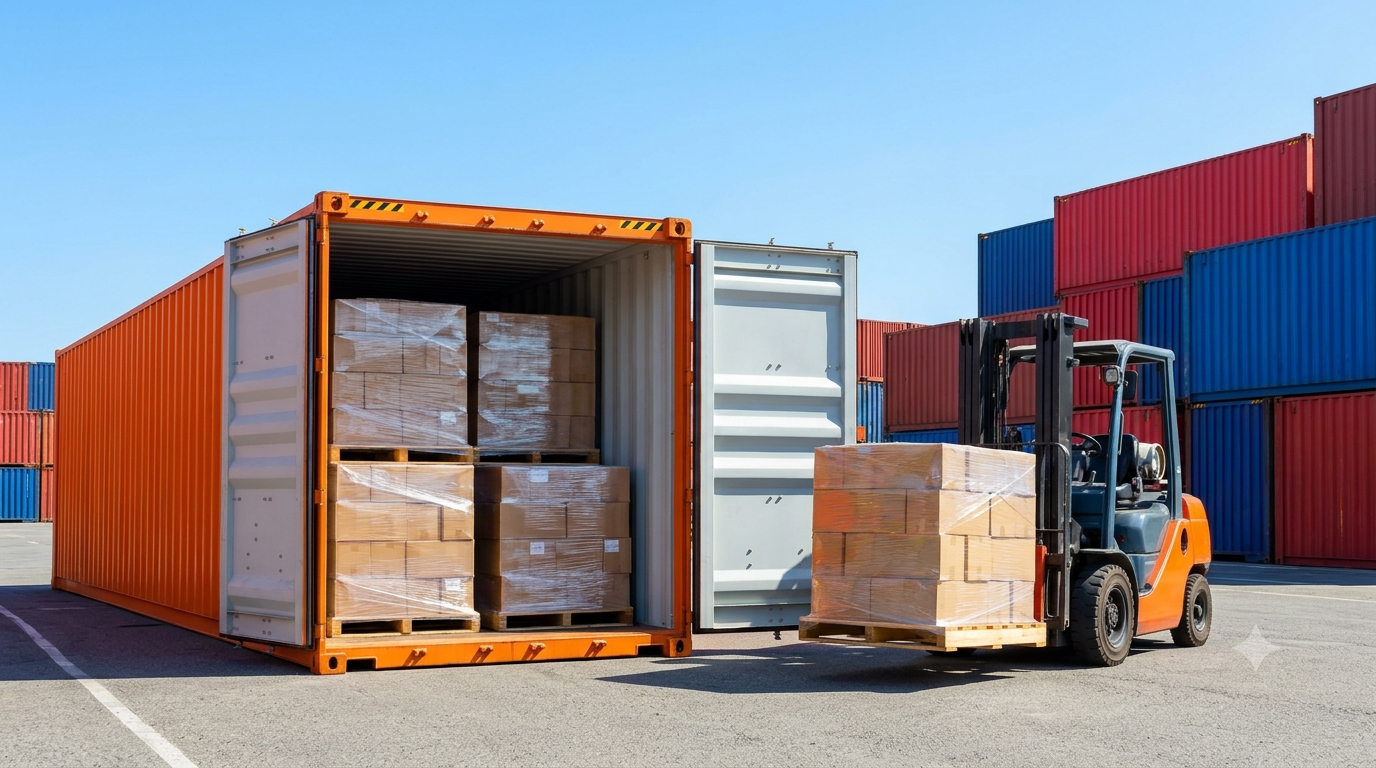
Pallet jacks, forklifts and walk-behind equipment impose different requirements. Measure wheel paths, turning movements, fork clearance and the transition across the threshold. A ramp must be suitable for the equipment and loaded pallet, with an appropriate gradient and a stable approach. The container floor also needs assessment for concentrated wheel loads rather than only the total mass inside the unit.
Do not assume that a forklift can enter because the door opening looks large enough. Check the mast, overhead clearance and load height throughout the movement. If loading from outside is proposed, establish a method that keeps people clear of suspended or moving loads and does not rely on improvised extensions or unsupported bridging.
Give every pallet an identifiable position
A simple location system reduces unnecessary handling. Mark each storage position and record the product, quantity, batch and date of entry against that position. For stock with an expiry date, arrange first-expiring stock to leave first. For other goods, first-in first-out may suit the stock policy. The system should remain usable when the person who loaded the container is absent.
For example, a distributor holding seasonal packaging could allocate the front positions to the next production run and the rear positions to later replenishment. That arrangement only works if purchasing and warehouse staff agree on the order of use. If the production schedule changes frequently, accessible positions may be more valuable than one additional tightly packed row.
Test the layout before filling the container
Mark out a representative bay and trial a loaded pallet movement before committing to the full arrangement. Observe how the operator approaches, places and retrieves the load, including when adjacent positions are occupied. A trial often reveals problems with door clearance, packaging overhang or an approach aisle that looked adequate on a drawing.
Include the eventual collection or relocation of the container in the plan. A unit that becomes inaccessible behind newly installed stock or fencing is difficult to service. Treat the container as part of the warehouse process, with a named person responsible for stock records, housekeeping and periodic checks of the working area.
Calculate working capacity with a trial inventory
Choose a representative group of pallets and build a location plan using their actual dimensions. Include packaging overhang and any stock that cannot be stacked. Mark the areas reserved for movement and inspection before counting the remaining positions. This gives a more useful figure than dividing the container’s internal volume by the volume of one pallet.
The calculation should also reflect access dependencies. If retrieving a rear pallet requires removing two front pallets, record that handling effort and decide whether the stock profile justifies it. A dense reserve arrangement can work for a predictable production sequence, but it becomes less attractive when orders change daily. Keep the assumptions visible so purchasing staff understand that a nominal spare position may be needed as working space.
Use a replenishment trigger the warehouse can maintain
Set a clear point at which stock transfers from the container to the main warehouse. The trigger might relate to an active pick location reaching its minimum holding, but it should reflect the actual replenishment lead time and staffing. Avoid an arrangement where every urgent order produces an unscheduled search through the reserve store.
Record the transfer as one completed movement, updating both locations. A product should not appear available in two places after it has moved. Periodically reconcile the container with the warehouse system and investigate recurring differences. If staff consistently bypass the planned flow, review whether the layout or record process is too cumbersome. A usable replenishment routine protects dispatch continuity while preserving the extra capacity the container was intended to provide.
Separate packaging damage from stock availability
A pallet may remain physically present while some cartons are no longer fit to dispatch. Mark damaged goods and adjust available quantities promptly, keeping them distinct from released stock. Otherwise, the inventory system can promise products that cannot be supplied.
Arrange an appropriate process for damaged packaging and investigate repeated contact with door frames, racks or neighbouring loads. These observations can reveal an unsuitable handling route. Improving that route is more valuable than repeatedly replacing cartons while leaving the cause unchanged.
A working example for seasonal reserve pallets
Consider a wholesaler receiving a seasonal product range in three delivery batches. The warehouse needs only the first batch for immediate picking, while the others replenish it over the following weeks. The container plan can allocate positions by replenishment order, with clear batch labels and a location register available to the dispatch team.
Before loading, the team trials its actual handling equipment and confirms the floor and threshold arrangement for the loads involved. If the trial shows that rear pallets cannot be retrieved efficiently, it revises the configuration or stock allocation. The outcome is a reserve store designed around scheduled movements, with capacity measured by useful pallet positions rather than a theoretical volume figure.
Choose the enclosure around access and stock conditions
Compare 20ft shipping containers and 40ft shipping containers using the actual inventory and retrieval method. Longer storage space can help with volume, but access frequency, stock shape and handling equipment may control the decision. Check the allocated unit’s clear dimensions and condition before committing the layout, including the effect of packaging and any proposed fittings.
Where stock needs lateral access, discuss side-opening containers. If the operation needs fixed equipment or a tailored interior, the container modification service provides a route to assess the scope. The design should preserve required clearances and inspection access rather than filling every apparent gap.
Match the commitment to the storage period
A temporary peak may justify discussing container hire, while a stable ongoing requirement can be assessed against purchase. Use current quotations and the expected duration, including the relevant delivery, collection and preparation requirements. Avoid assuming that a low periodic rate or a low purchase price represents the complete cost of the arrangement.
Before requesting a quote, prepare an inventory, retrieval schedule and site information. Include sensitive products, unusual loads and any environmental requirements. Agree who manages stock records and condition checks after delivery. The container should support a repeatable working process, with the specification, site and daily routines considered together. Revisit the choice if the stock mix or access pattern changes substantially; a unit selected for reserve storage may not suit a later role involving continuous picking or specialist goods.
Discuss the stock plan with Tiger
Prepare the stock dimensions, approximate quantities, access frequency and proposed storage period before speaking with Tiger. Include photographs and measurements of the site, plus any unusual weights or product requirements. Ask for the container and relevant services to be quoted against that information. A clear enquiry helps the supplier assess the appropriate configuration and gives the business a practical basis for comparing its options before committing to the extra storage.